Hey there! I’m a supplier in the FDY (Fully Drawn Yarn) business. You might be wondering what goes into making this stuff. Well, I’m here to break it down for you. FDY
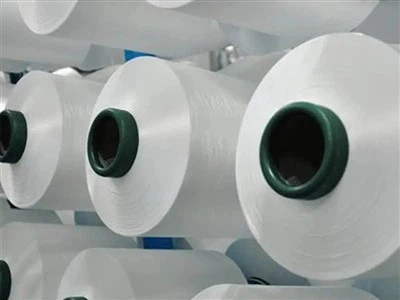
First off, let’s start with the most common raw material for FDY: polyester chips. Polyester is a synthetic polymer, and these chips are like the building blocks of FDY. They’re made from two main chemical components: terephthalic acid (TPA) or dimethyl terephthalate (DMT), and ethylene glycol (EG).
The process of making polyester chips is pretty interesting. When using TPA, it reacts with EG in a high – temperature and high – pressure environment. This reaction is called esterification. Then, through a series of polymerization steps, these small molecules join together to form long chains of polyester, which are then cooled and cut into small chips. If DMT is used instead, it first goes through a transesterification reaction with EG, and then the polymerization process follows to create the same polyester structure.
These polyester chips are crucial because their quality directly impacts the properties of the final FDY product. For example, if the chips have a consistent molecular weight, the resulting FDY will have better strength and uniformity. We always look for high – quality chips from reliable suppliers to ensure our FDY meets the standards our customers expect.
Another important aspect of using polyester chips is their intrinsic viscosity (IV). IV is a measure of the molecular weight of the polyester. A higher IV generally means a higher molecular weight, which can lead to stronger and more durable FDY. We carefully select chips with the right IV value depending on the specific requirements of the FDY we’re producing, whether it’s for clothing, home textiles, or industrial applications.
Now, besides polyester chips, additives are also used in the production of FDY. These additives can enhance the performance and functionality of the yarn. One common additive is titanium dioxide (TiO₂). It acts as a delustrant. In the textile industry, sometimes we don’t want the yarn to be too shiny. By adding TiO₂, we can reduce the gloss of the FDY and give it a more natural, matte appearance.
Antioxidants are another type of additive. Polyester can be prone to oxidation, especially when exposed to high temperatures during the spinning process or to sunlight over time. Antioxidants help prevent the degradation of the polyester molecules, which in turn extends the lifespan of the FDY. They work by reacting with the free radicals that are formed during oxidation, stopping the chain reaction that would otherwise damage the polymer structure.
There are also antistatic additives. In some applications, like in the electronics industry or in clothing worn in dry environments, static electricity can be a problem. Antistatic additives help to dissipate the static charge on the surface of the FDY, reducing the risk of electrostatic discharge. This is important not only for the comfort of the end – user but also for the protection of sensitive electronic components.
Colorants are also a key part of the raw materials used in FDY production. There are two main ways to color FDY: dope – dyeing and post – dyeing. Dope – dyeing involves adding colorants directly to the polyester chips or the polymer melt before spinning. This method has several advantages. The color is more uniform throughout the yarn, and it’s more color – fast, meaning it won’t fade easily. Post – dyeing, on the other hand, is done after the yarn has been spun. It allows for more flexibility in terms of color selection, as different dyes can be used to achieve a wide range of colors. But it also requires additional processing steps and can be more expensive.
When it comes to colorants, we have a choice between pigments and dyes. Pigments are insoluble particles that are dispersed in the polymer matrix. They provide good color strength and lightfastness. Dyes, on the other hand, are soluble in the polymer or in a solvent and are absorbed into the fiber. They can offer more vibrant colors but may not be as resistant to fading as pigments in some cases.
Now, let’s talk about the quality control of these raw materials. As a supplier, we can’t just take any raw materials and start producing FDY. We have strict quality control measures in place. For polyester chips, we check the physical properties such as particle size, bulk density, and moisture content. A consistent particle size ensures a smooth melting and spinning process. High moisture content in the chips can cause problems during polymerization and spinning, so we make sure to dry them properly before use.
For additives, we test their purity and effectiveness. For example, when using TiO₂ as a delustrant, we check its particle size distribution. If the particles are too large or too small, it can affect the delustering effect. We also conduct performance tests on the antioxidants and antistatic additives to ensure they work as expected.
In the case of colorants, we test for color fastness, color consistency, and compatibility with the polyester. We use color – matching systems to ensure that the color of the FDY meets the customer’s specifications. Any deviation in color can be a big problem, especially for customers who need to match a specific color for their products.
In conclusion, the production of FDY involves a combination of high – quality raw materials and strict quality control. Polyester chips form the base of the yarn, while additives and colorants enhance its performance and appearance. As a supplier, we’re constantly looking for ways to improve the quality of our FDY by using the best raw materials and optimizing the production process.

If you’re in the market for FDY, whether it’s for your clothing brand, home textile business, or industrial application, I’d love to have a chat with you. We can discuss your specific requirements and how our FDY can meet your needs. Don’t hesitate to reach out for a procurement discussion.
Sorona PTT and PET References:
- Textile Chemistry textbooks for polyester synthesis and properties
- Industry reports on additives used in synthetic fiber production
- Technical manuals from raw material suppliers on quality specifications
Suzhou Junhui Textile Co., Ltd
We’re well-known as one of the leading fdy manufacturers in China. If you’re going to wholesale cheap fdy, welcome to get free sample from our factory. Also, customized service is available.
Address: No.757, West Ring Road, Shengze Town, Wujiang Area, Suzhou City, Jiangsu Province, China
E-mail: alice@xiaorangroup.com
WebSite: https://www.junhuitextile.com/
