What is the screw design of HDPE Pipe Machine? HDPE Pipe Machine
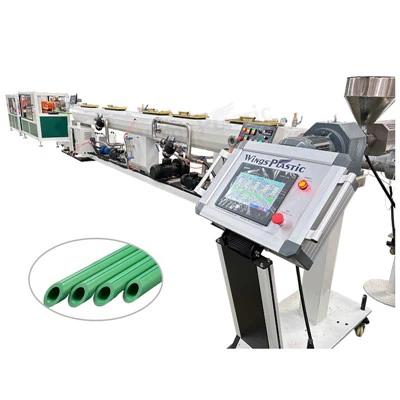
As a supplier of HDPE pipe machines, I’ve witnessed firsthand the pivotal role that screw design plays in the production of high – quality HDPE pipes. The screw is the heart of an HDPE pipe machine, responsible for melting, mixing, and conveying the HDPE resin to form pipes with consistent quality and performance.
The Basics of Screw Design in HDPE Pipe Machines
The screw in an HDPE pipe machine is a helical component that rotates within a barrel. Its main functions include feeding the raw HDPE material, melting it through frictional heat and external heating, and then pumping the molten polymer through the die to form the pipe.
The design of the screw is highly specialized, taking into account various factors such as the characteristics of the HDPE resin, the desired pipe diameter and wall thickness, and the production speed. A well – designed screw can ensure efficient melting, uniform mixing, and stable extrusion of the HDPE material.
Key Parameters in Screw Design
1. Length – to – Diameter Ratio (L/D)
The L/D ratio is a crucial parameter in screw design. It refers to the ratio of the screw’s length to its diameter. A higher L/D ratio provides more residence time for the HDPE material within the screw, allowing for better melting and mixing. For HDPE pipe machines, L/D ratios typically range from 20:1 to 36:1. A longer screw can improve the quality of the melt, resulting in pipes with better mechanical properties and surface finish. However, increasing the L/D ratio also increases the cost of the machine and the power consumption.
2. Compression Ratio
The compression ratio is the ratio of the volume of the feed section to the volume of the metering section of the screw. It is an important factor in determining the melting and conveying efficiency of the screw. For HDPE, a compression ratio of 2.5:1 to 4:1 is commonly used. A higher compression ratio can generate more heat through shear, which helps in melting the HDPE resin more effectively. However, an excessively high compression ratio may cause over – heating and degradation of the polymer.
3. Flight Depth
The flight depth of the screw refers to the distance between the crest and the root of the screw thread. In the feed section, a deeper flight depth is used to facilitate the entry of the solid HDPE resin. As the material moves towards the metering section, the flight depth gradually decreases to compress the material and increase the pressure. A proper flight depth design ensures smooth material flow and efficient melting.
4. Screw Pitch
The screw pitch is the distance between two consecutive threads. A uniform screw pitch is generally used in the feed and metering sections, while a variable pitch may be employed in the compression section to enhance the mixing and melting process. The pitch affects the conveying speed and the degree of mixing of the HDPE material.
Different Types of Screw Designs for HDPE Pipe Machines
1. Single – Flight Screw
The single – flight screw is the most basic type of screw design. It has a single continuous thread that runs along the length of the screw. This type of screw is simple in structure and easy to manufacture. It is suitable for small – scale HDPE pipe production with relatively low output requirements. However, the mixing and melting efficiency of a single – flight screw may be limited compared to other designs.
2. Double – Flight Screw
A double – flight screw has two parallel threads running along the screw. This design increases the conveying capacity and the mixing efficiency of the screw. The double – flight screw can transport more HDPE material in a given time, resulting in higher production speeds. It also provides better mixing of the polymer, which is beneficial for producing pipes with uniform properties.
3. Barrier Screw
The barrier screw is a more advanced screw design. It has a barrier flight that separates the melting and unmelted zones within the screw. This design allows for more efficient melting of the HDPE resin by preventing the unmelted particles from passing through the metering section. The barrier screw can significantly improve the quality of the melt and reduce the production of defective pipes.
Importance of Screw Design in HDPE Pipe Production
The quality of the screw design directly impacts the quality of the HDPE pipes produced. A well – designed screw can ensure the following:
1. Consistent Pipe Quality
A properly designed screw can provide a uniform melt temperature and pressure, resulting in pipes with consistent wall thickness, diameter, and mechanical properties. This is crucial for meeting the strict quality standards in various applications, such as water supply, drainage, and gas transportation.
2. High Production Efficiency
An efficient screw design can increase the production speed of the HDPE pipe machine. By optimizing the melting and conveying process, the screw can reduce the residence time of the material in the machine, allowing for higher output rates. This is essential for meeting the market demand and improving the competitiveness of the production.
3. Energy Savings
A well – designed screw can also contribute to energy savings. By reducing the power consumption required for melting and conveying the HDPE material, the overall energy efficiency of the pipe machine can be improved. This not only reduces the production cost but also has a positive impact on the environment.
How Our Company’s Screw Design Stands Out
As a supplier of HDPE pipe machines, we take great pride in our screw design. Our engineering team has extensive experience in designing screws for HDPE pipe production. We use advanced computer – aided design (CAD) and simulation software to optimize the screw parameters, ensuring the best performance of our machines.
We also conduct rigorous testing on our screws to ensure their reliability and durability. Our screws are made of high – quality materials that can withstand the high – temperature and high – pressure environment during the extrusion process. We offer a variety of screw designs to meet the different needs of our customers, whether it’s for small – diameter pipes or large – diameter pipes.
Conclusion
In conclusion, the screw design of an HDPE pipe machine is a complex and critical aspect of the pipe production process. A well – designed screw can significantly improve the quality, efficiency, and energy efficiency of the HDPE pipe production. As a leading supplier of HDPE pipe machines, we are committed to providing our customers with the best screw designs and high – quality machines.

If you are interested in our HDPE pipe machines or have any questions about screw design, we welcome you to contact us for further discussion and potential business cooperation. We look forward to working with you to achieve your production goals.
HDPE Pipe Machine References
- "Extrusion of Polymers: Theory and Practice" by C. Rauwendaal
- "Plastics Extrusion Technology" by Michaeli, W.
Qingdao Wings Plastic Technology Co., Ltd.
As one of the most experienced hdpe pipe machine manufacturers and suppliers in China, we also support customized service. Please feel free to buy durable hdpe pipe machine made in China here from our factory. For price consultation, contact us.
Address: C02 Of Anshengyi Road, No.2 Fuan Industry Zone,Jiaodong Town, Jiaozhou City, Qingdao City, Shandong Province,China
E-mail: kelly@wingsplastic.com
WebSite: https://www.wingsextruder.com/
