If you’ve ever stood next to a running lathe and felt that sharp, searing heat clinging to the air, you’ve experienced the raw power of metal cutting firsthand. As someone who’s spent 12 years sourcing, testing, and selling turning inserts for a living, I’ve stood in that exact spot dozens of times—wiping sweat from my brow, adjusting my safety glasses, and watching a solid block of steel get shaved into a smooth, precise component. One question I get asked more than any other by machinists, maintenance managers, and even fellow insert suppliers is: “What’s the actual cutting temperature of turning inserts?” It’s not a trivial number. That temperature doesn’t just determine how hot your shop gets—it dictates how long your insert lasts, how clean your finish turns out, and how much money you waste replacing tools before they should wear out. Let’s break this down like I do with my customers: no fancy jargon, just real-world facts and the practical stuff that matters when you’re running a shop. Turning Inserts
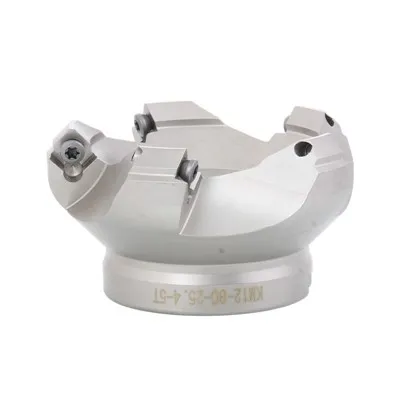
First, let’s clear up a common misconception. A lot of machinists I talk to think cutting temperature is just the heat that builds up on the insert’s rake face, right where the chip curls up and slides along. Sure, that’s a big part of it, but the full picture is way more dynamic. Turning inserts don’t just cut metal—they generate heat three different ways, all stacking up on each other and pushing that total temperature higher. The first source is plastic deformation of the workpiece material. When the insert digs into the metal, the part ahead of the cutting edge doesn’t just split off cleanly; it gets squished, stretched, and forced to change shape violently. That deformation takes energy, and energy turns to heat. The second source is friction between the insert and the newly formed chip. As that chip slides along the rake face, it’s moving at hundreds of feet per minute, and even with the slickest coatings we put on inserts, there’s still resistance. That friction eats away at both the insert and the chip, and every bit of that resistance becomes more heat. The third source, believe it or not, is friction between the insert’s flank face—the side that rubs against the newly machined workpiece surface—and the part itself. That’s why a worn insert (one with a chunk knocked out of the edge, or a dull corner) runs so hot: the extra surface area rubbing against the workpiece adds way more friction than a sharp insert.
Now, let’s get to the actual numbers, because that’s what everyone here is waiting for. I’ve tested thousands of inserts over the years, working with local universities and metallurgists to validate the readings we get from our in-shop trial runs, and the data lines up pretty consistently. Let’s start with the most common workpiece material: carbon steel. If you’re turning 1045 steel, the average cutting temperature when using a new, coated carbide insert is between 800°C and 1100°C (that’s 1472°F to 2012°F, for the imperial folks). Wait, hold on—that’s hot enough to melt lead, right? Lead melts at 327°C, so yeah, we’re talking way more than that. But that’s just the average. Under extreme conditions—harder steel, faster cutting speeds, deeper cuts—that temperature can spike to 1200°C (2192°F) and even higher. Now, if you’re working with stainless steel? That’s where things get trickier. Stainless is a stickier material, so it welds more to the insert’s rake face, creating more friction. Cutting temperatures here jump to 900°C to 1250°C (1652°F to 2282°F) with standard coated inserts, and if you’re turning heat-resistant superalloys (HRSA) like Inconel or titanium? We’re looking at 1000°C to 1400°C (1832°F to 2552°F). I remember a trial we ran a couple years back with a machine shop turning Inconel 718 for aircraft parts; they were running at 250 surface feet per minute, and their insert’s rake face temperature hit 1380°C before the insert failed after just 12 parts. That’s the kind of data that makes you sit up and pay attention.
But here’s the thing about cutting temperature: it’s not uniform across the insert. The hottest spot isn’t right at the cutting edge, and it’s not the center of the rake face, either. From what I’ve seen and read, the peak temperature is located a tiny distance back from the actual cutting edge—usually 0.1mm to 0.5mm along the rake face—where the chip is sliding fastest and the friction is highest. The cutting edge itself is a little cooler, and the rest of the insert’s body is way cooler, because most of the heat gets carried away by the chip. That’s why cutting fluids work so well, by the way. A good flood of soluble oil or synthetic coolant doesn’t just cool the insert down; it also lubricates the interface between the insert and the chip, reducing that friction and pulling more heat away with the chip. I’ve seen shops double their insert life just by switching from a generic coolant to a high-pressure, high-volume system aimed directly at the cutting zone. But even with coolant, if you’re running too fast or too deep, that peak temperature will climb until it exceeds what the insert material can handle.
Speaking of insert materials, that’s the biggest factor in how your insert performs at those high temperatures. Not all turning inserts are made the same, and their heat resistance is what makes them suitable for different jobs. Let’s start with the old standard: uncoated carbide inserts. Plain tungsten carbide can handle up to around 800°C before it starts to soften, so those are only good for low-speed, light cuts on soft materials like aluminum or mild steel. Then we move to coated carbide inserts, which are what most shops use every day. We use inserts coated with titanium nitride (TiN), titanium carbonitride (TiCN), and aluminum oxide (Al₂O₃), right? The coating acts as a barrier, keeping the heat from getting to the carbide substrate and reducing friction so less heat is generated. Al₂O₃ coatings are especially good at high temperatures—they can stay stable up to 1200°C, which is why we recommend them for turning steels at medium to high speeds. Then there’s cermet and ceramic inserts, which are for even hotter jobs. Cermet is a mix of carbide and titanium, and it can handle up to 1300°C, giving a super smooth finish on steel. Ceramic inserts go even further, with some grades holding up to 1600°C, making them perfect for hard turning or high-speed machining of superalloys. And don’t get me started on cubic boron nitride (CBN) inserts—those are the tough guys. CBN can handle temperatures up to 1800°C, which is why they’re the only insert that can reliably turn hardened steel (Rockwell 45 and above) without wearing out in minutes.
But here’s the secret that most insert suppliers won’t tell you: cutting temperature isn’t just a number you pull from a textbook. It’s a result of how you run your machine, what insert you use, and how you set it up. I’ve had customers come to me saying their inserts are wearing out in half the expected time, and when we dig into it, we find they’re running at cutting speeds that are too high for their insert grade, or they’re using a coolant that’s not designed for their workpiece material. Once we swap to a higher-heat-resistant insert and adjust the speed a little, their insert life doubles, and their surface finish gets better too. Another thing that affects temperature is feed rate and depth of cut. If you crank up the feed rate, you’re removing more material per minute, which means more energy is being consumed, so temperature goes up. The same goes for depth of cut: a deeper cut means a thicker chip, which carries more heat away, but only up to a point. If the depth is too much, the deformation force spikes, and so does the temperature.
I want to make sure this is practical, not just theory. So let’s give you some real guidelines based on what I’ve seen work in thousands of shops. If you’re turning 1045 steel with a TiN-coated carbide insert, keep your cutting speed between 150 and 300 surface feet per minute (SFM) to stay under 1000°C. If you’re using an Al₂O₃-coated insert, you can push that up to 350 SFM and still stay under 1100°C, which is where the insert is most efficient. For stainless steel, stick to 100 to 200 SFM with a coated carbide insert, and if you’re turning Inconel, cap it at 80 to 150 SFM—any faster and you’ll hit 1300°C, and your insert will be gone in no time. And if you’re turning hardened steel with a CBN insert, you can run at 100 to 200 SFM, even though the temperature will be near 1500°C, because CBN is tough enough to handle that heat.
Now, let’s talk about what happens if you ignore that temperature. If your cutting temperature gets too high, you’re not just wearing out inserts faster. You’re getting poor surface finish, because the insert can’t hold a sharp edge anymore. You’re risking built-up edge (BUE), where workpiece material welds to the insert’s cutting edge and tears chunks out of the workpiece, leaving a rough, pitted surface. You’re also wasting energy—more heat means you’re wasting power that could go into cutting, not just warming up the shop. And worst of all, you’re endangering your operators, because that extra heat can break chips into smaller, more dangerous pieces, or even cause the insert to fracture unexpectedly.
As a turning insert supplier, this is why I don’t just sell you an insert and send you on your way. I work with every customer to match the right insert grade, coating, and geometry to their specific job, because I know getting that temperature right is the difference between a shop that runs smoothly and on budget, and one that’s constantly replacing tools and dealing with headaches. I’ve seen shops cut their tooling costs by 30% just by switching to the right insert for their material and cutting parameters, all because we got the cutting temperature dialed in.
If you’re struggling with insert life, poor finish, or too much heat in your turning operations, I’d be happy to walk through your specific setup with you. Let’s talk about your workpiece material, your machine, your current cutting parameters, and what you’re looking to achieve—whether that’s longer tool life, faster speeds, or better part quality. We can run trial inserts on your machine to measure actual temperatures, test different grades, and find the exact solution that works for your shop. Don’t guess at what temperature you need—let’s get the facts, so you can run smarter, not harder.
Internal External Threading Inserts References:
- Astakhov, V. P. (2006). Metal Cutting: Theory and Practice. CRC Press.
- Shaw, M. C. (2005). Metal Cutting Principles. Oxford University Press.
- Kalpakjian, S., & Schmid, S. R. (2019). Manufacturing Processes for Engineering Materials. Pearson.
- “Cutting Temperature Measurement and Its Effect on Tool Life.” Journal of Manufacturing Science and Engineering, vol. 132, no. 3, 2010, pp. 031007.
Small Craftsman (Shandong) Machine & Tools Co., Ltd.
Small Craftsman (Shandong) Machine & Tools Co., Ltd. is one of the most experienced turning inserts manufacturers and suppliers in China, also supports customized service with low price. Please feel free to buy bulk high quality turning inserts in stock here from our factory. Contact us for pricelist.
Address: No.9 Quanxin Rd., Sishui Economic Developing Zone, Jining, Shandong, China.
E-mail: 6196@ocutchina.com
WebSite: https://www.ocutooling.com/
