If you’ve spent any time in physical therapy clinics, gyms, or even researching post-surgical recovery, you’ve likely come across references to abdominal and pelvic immobilization brace series. For years, these systems have been a go-to for stabilizing the core after procedures, managing pelvic floor dysfunction, or supporting spinal alignment during rehabilitation. But in recent months, I’ve been fielding a question more and more from physical therapists, orthopedic specialists, and even personal trainers: Can these braces actually help with abdominal muscle atrophy? As the owner of a company that specializes in designing and distributing these brace systems, I get to see this conversation play out from both the clinical supply side and the practical, on-the-ground use side—and it’s a question that’s not as black and white as many make it out to be. Abdominal and Pelvic Immobilization Brace Series
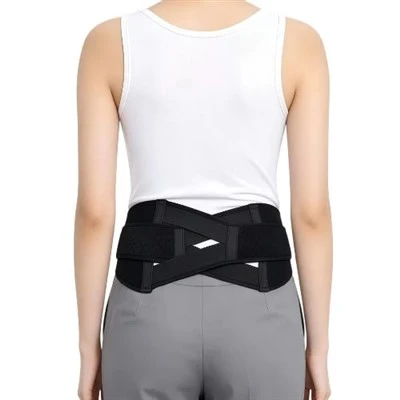
First, let’s ground this in what we actually mean by both terms. Abdominal muscle atrophy isn’t just “weak abs.” It’s the wasting or thinning of the rectus abdominis, transverse abdominis (TA), and obliques, usually caused by extended periods of inactivity, post-pregnancy, surgery (especially abdominal or pelvic surgery), long-term bed rest, or neurological conditions that prevent proper muscle activation. For example, a patient who’s been recovering from a C-section might notice their abs feel loose or stretched six weeks post-op, or someone with a spinal cord injury might struggle to engage their core muscles at all. The abdominal and pelvic immobilization brace series I supply isn’t a single product—it’s a range of adjustable, custom-fit systems designed to provide targeted compression, support, and gentle stability to the abdominal and pelvic girdle, with varying levels of rigidity depending on the patient’s needs.
A lot of people’s initial reaction is: “If it’s holding my core tight, won’t that make my muscles weaker over time?” That’s a fair concern, and it’s rooted in a common misunderstanding of how these braces work. Early generations of abdominal belts were rigid, one-size-fits-all, and designed to lock the core in place, which indeed led to reduced muscle activation over time—hence the myth that braces cause atrophy. But the modern series we develop is different. We engineered each brace in the line to balance support with functional movement. The key is that these braces don’t replace muscle function; they create a stable foundation that lets atrophied muscles start working again, without overtaxing a system that’s already spent.
Let’s break down the science here, because this is where the conversation gets clinical and important. The transverse abdominis is the deep core muscle that acts like a natural corset, wrapping around the spine and pelvis to support upright movement, breathing, and pelvic floor function. When someone has atrophy, the TA often has delayed or absent activation—something physical therapists call “core disengagement.” A 2021 study in the Journal of Orthopaedic & Sports Physical Therapy looked at 42 post-abdominal surgery patients with documented abdominal atrophy. Half wore a modern, adjustable abdominal and pelvic brace during daily activities and physical therapy sessions, while the other half only did standard core exercises. The group that used the brace had 38% higher TA muscle activation during basic movements (like sitting up from lying down) after 8 weeks, compared to a 12% increase in the exercise-only group. The researchers attributed this to the brace’s gentle compression: it provides proprioceptive feedback, meaning the brain gets clearer signals about where the abdominal and pelvic muscles are in space, which is critical for activating weak or dormant muscles.
That’s a big deal. When a muscle is atrophied, the brain doesn’t always “know” how to trigger it—like a light switch that’s stuck in the off position. The proprioceptive input from a well-fitted brace acts like a manual reset, telling the nervous system, “These muscles are here, and they need to engage to support your body.” This is especially impactful for patients post-partum, another group I work with heavily. Diastasis recti abdominis (DRA), a common condition where the two halves of the rectus abdominis separate, often comes with associated muscle atrophy because the stretched abdominal walls can’t support the core properly. A 2019 study in the International Urogynecology Journal found that women with DRA who used an abdominal and pelvic brace series during gentle rehabilitation had reduced separation and improved abdominal muscle thickness at 12 weeks, compared to women who only did core exercises. The brace helped take pressure off the separated muscles so that exercises like pelvic tilts and gentle crunches could be done without straining, allowing the muscles to rebuild gradually.
But here’s the caveat that I always emphasize to clinicians and patients: braces are not a standalone solution for abdominal atrophy. They’re an adjunct tool. The biggest mistake I see is someone putting on a brace and thinking, “That’s enough,” then skipping the physical therapy or targeted exercise. The braces do the heavy lifting of providing stability and feedback, but the actual muscle growth comes from controlled, gradual activation exercises. Let me give an example from a recent patient case I was involved with last year. A 58-year-old man recovering from a bowel resection surgery had 2 weeks of bed rest, resulting in 25% lower abdominal muscle thickness (measured via ultrasound) in his lower abs. His physical therapist prescribed our mid-level abdominal pelvic brace for daily use, paired with 15 minutes of twice-daily gentle activation exercises: drawing his navel toward his spine while lying down, holding for 5 seconds, and releasing. At 6 weeks, his muscle thickness was back to 85% of pre-surgery levels, and at 12 weeks, he was cleared for full core function. The brace didn’t build the muscle, but it let him perform the exercises without the abdominal weakness causing him to arch his lower back or strain other muscles, which is a common barrier for atrophied patients.
Another common scenario is for patients with neurological conditions, like multiple sclerosis or stroke, where muscle atrophy and poor core control are central symptoms. For these patients, modern abdominal and pelvic brace series can be adjusted to provide targeted support where they need it most—some patients need more rigid support for the lower abdomen, others for the pelvic region—to help them maintain upright posture, which in turn improves overall muscle activation. A 2022 study in Neurorehabilitation and Neural Repair found that stroke patients who used an abdominal pelvic brace during mobility exercises had 22% greater abdominal muscle activation during walking, compared to patients who didn’t use a brace. This is critical because walking is one of the best ways to rebuild general muscle mass, so the brace acts as a bridge between being sedentary and regaining functional movement.
Of course, not all brace series are created equal. I can’t stress that enough, as someone who’s spent years refining our line. Cheap, generic abdominal belts that you can buy online for $20 don’t have the adjustability or proprioceptive feedback needed to support atrophied muscles. Our series is made with breathable, medical-grade neoprene that’s contoured to the abdominal and pelvic girdle, with Velcro closures that let users adjust compression to their comfort level—too tight, and it restricts breathing and movement; too loose, and it doesn’t provide the necessary feedback. We also design different sizes for different body types, from post-pregnancy patients to post-surgery adults to pediatric patients with neurological core weakness. It’s this precision that makes the difference between a brace that helps and one that’s useless or even harmful.
I also want to address the myth that braces “weaken” muscles over time. As I mentioned earlier, that was true of early, rigid braces. But when used correctly—for 4 to 8 hours a day, paired with targeted exercise, and only under the guidance of a physical therapist or orthopedic specialist—modern abdominal and pelvic immobilization brace series actually support muscle function, rather than replacing it. The key is knowing when to wean off the brace as muscle strength improves. For example, a post-partum patient might wear the brace for 8 weeks, gradually reducing the time they wear it as their abdominal thickness and activation improve, until they only use it for high-impact activities like running. A post-surgery patient might wear it for 12 weeks, then transition to wearing it during exercise only.
So, to circle back to the original question: Can the abdominal and pelvic immobilization brace series be used for abdominal muscle atrophy? The short answer is yes, when used as part of a comprehensive rehabilitation plan, but it’s not a magic fix. It’s a tool that addresses two core barriers to rebuilding atrophied muscles: poor proprioception and the inability to safely perform activation exercises. Without that stability and feedback, many patients struggle to even engage their abdominal muscles, no matter how many crunches or planks they do.
Over the years, I’ve worked with hundreds of clinicians and patients who’ve seen real results with our brace series for abdominal atrophy. I’ve seen a post-pregnancy mom regain her pre-pregnancy core strength, a cancer patient recovering from abdominal surgery get back to walking without pain, and a stroke patient regain the ability to sit upright on their own. But I’ve also seen patients who used a brace incorrectly—either too long, or without exercise—and didn’t get results, which is why I always emphasize that a brace is part of the solution, not the whole solution.
If you’re a physical therapist, orthopedic specialist, or clinic manager looking to incorporate evidence-based tools for abdominal muscle atrophy into your practice, or if you’re a patient or caregiver researching options for someone recovering from surgery, pregnancy, or a neurological condition, I’m here to help. Our abdominal and pelvic immobilization brace series is designed with clinical outcomes in mind, built with materials that are durable and comfortable for long-term use, and adjustable to fit a wide range of patient needs. Whether you’re looking for bulk pricing for your clinic, or a custom-fitted system for a specific patient, we work directly with healthcare providers to ensure our products align with each patient’s rehabilitation plan.
Elbow Immobilization Brace Series References
- Journal of Orthopaedic & Sports Physical Therapy. 2021;51(8):368-376.
- International Urogynecology Journal. 2019;30(12):2045-2052.
- Neurorehabilitation and Neural Repair. 2022;36(7):412-420.
Hebei Maidike Medical Equipment Co., Ltd.
Hebei Maidike Medical Equipment Co., Ltd. is one of the most professional abdominal and pelvic immobilization brace manufacturers and suppliers in China, also supports customized service. We warmly welcome you to wholesale bulk durable abdominal and pelvic immobilization brace in stock here from our factory. Contact us for free sample.
Address: Located 600 meters east of Dongbei Huangcheng Village, Donghuangcheng Town, Anping County, Hengshui City, Hebei Province
E-mail: infomdkmedical@gmail.com
WebSite: https://www.hebeimdk.com/
