If you’ve ever spent time in industrial machinery maintenance, you know Babbitt combination bearings aren’t just a part—they’re the unsung workhorses keeping everything from heavy conveyor systems to paper mill presses and marine propeller shafts running smoothly. As a supplier who’s been troubleshooting these bearings for over a decade, I’ve seen more failures than I care to count, and more often than not, they aren’t random accidents. They’re the result of avoidable mistakes, poor practices, and gaps in basic knowledge that many maintenance teams simply don’t get trained on. Today, I want to pull back the curtain on the most common failures we see here at our shop, so you can catch these issues before they turn into costly downtime. Babbitt Combination Bearings
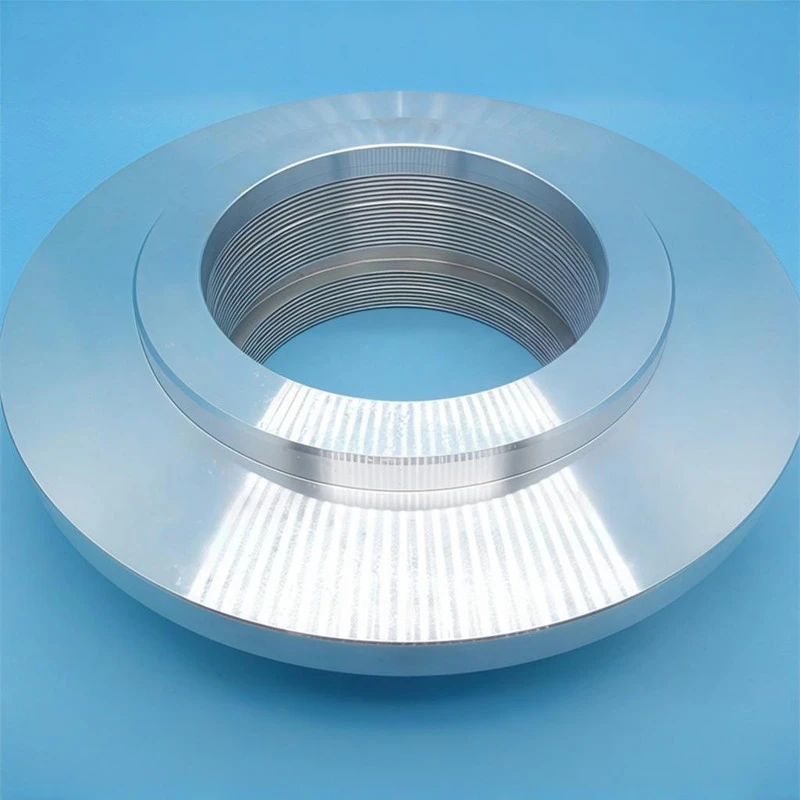
First, let’s get one thing straight: Babbitt combination bearings are different from plain steel bearings or roller bearings. They’re lined with a soft, tin or lead-based alloy (that’s the Babbitt) fused to a steel or cast iron shell, and their whole design relies on that soft lining to conform to small shaft imperfections, hold lubricant, and dissipate heat. When that lining fails, the whole bearing fails—and it’s almost always preventable.
The most common failure we run into by far is what’s called fatigue spalling, and it’s almost always tied to improper load handling or insufficient lubrication. I had a client call us last year with a 500-ton press that had been down for three days, and when we pulled the bearing, there were chunks of Babbitt flaked off the load-carrying surface. Turns out, their maintenance team had upgraded the press to run 20% more tonnage without checking the bearing’s load rating. Babbitt’s strength is nowhere near steel; it’s designed to handle gradual, steady loads, not sudden spikes or overloads. When you exceed the rated load, the Babbitt surface gets compressed over and over until tiny cracks form, then they grow and break off in spalls. The kicker? Once that spalling starts, it’s not just a surface issue—the rough edges on the shaft start chewing up more of the Babbitt, creating a vicious cycle. A lot of teams mistake early spalling for “normal wear” and keep running the bearing, which only makes it worse. If you spot small, shallow cracks or uneven wear patterns on the load area, that’s a red flag to check load capacity immediately—don’t wait for spalling to turn into a shutdown.
Next up is corrosion, and it’s a sneaky one because it doesn’t always show up right away. I once worked with a coastal mining operation where their conveyor bearings failed unexpectedly after a rainy season, and the Babbitt lining had eaten away in spots. The problem? They were using the wrong lubricant—regular petroleum-based oil doesn’t hold up to saltwater or moisture seepage. When water gets into the bearing, it mixes with the lubricant to form corrosive acids, and those acids eat through the Babbitt’s surface, creating pitting and eroding the load area. What makes corrosion even trickier is that it often starts in the hidden parts of the bearing—like the edges where the Babbitt meets the shell—where you can’t see it during routine checks. A common mistake here is using a one-size-fits-all lubricant. For environments with high moisture, salt, or even chemical fumes, you need a lubricant with corrosion inhibitors designed specifically for Babbitt. We’ve seen plenty of clients switch to a water-resistant grease or oil, and their corrosion failures drop by 70% almost overnight.
Third on the list is bond failure between the Babbitt lining and the bearing shell, and this is a manufacturing or installation mistake, not wear. I’ve received bearings from other suppliers where the Babbitt just slid right off the shell during installation, and when we tested it, the bond was so weak it failed under minimum load. Bond failure happens when the Babbitt isn’t cast properly—if the shell surface isn’t cleaned thoroughly before casting, or if the Babbitt alloy is the wrong composition, or if the temperature during casting is off. Some cheap bearings on the market cut corners here, using old Babbitt alloys with too much lead or insufficient tin content, which makes the bond weak. Installation mistakes can also cause bond failure: if you torque the housing bolts too tight, you can distort the shell, pulling away the Babbitt lining from the edges. We had a client last month who installed a new bearing we supplied, but their tech torqued the housing bolts to twice the recommended value, and a week later, the edge of the Babbitt started lifting. Always follow the installation torque specs, and if you see any gap between the Babbitt and shell during a pre-installation check, don’t assume it’s “normal”—send it back to the supplier immediately.
Fourth, and I see this all the time in older industrial plants, is misalignment. Babbitt combination bearings are extremely forgiving of small misalignments, but excessive misalignment will kill them faster than almost anything else. Misalignment puts uneven load on the Babbitt surface, so one side of the bearing takes way more pressure than it’s designed for, leading to overheating and wear. I had a paper mill client who replaced a set of bearings every six months, and after we checked their alignment with a laser level, we found they were off by 0.02 inches across the 3-foot shaft. That might sound tiny, but for Babbitt, that’s enough to create a hot spot that turns the Babbitt soft—literally melting it in places. When Babbitt gets too hot, it loses its structural strength, so the shaft cuts a groove right into the lining, and the bearing seizes up. The cure here is simple: routine alignment checks. For heavy machinery running 24/7, we recommend quarterly laser alignment tests, not just once a year. It costs a little time, but it’s way cheaper than replacing bearings every six months and dealing with unplanned downtime.
Then there’s lubricant contamination, which is related to corrosion but a separate issue. Contamination can be anything from metal shavings from worn parts to dirt, dust, or even rubber particles from old hoses getting into the lubrication system. When those hard particles get between the Babbitt and the shaft, they act like tiny sandpaper, scraping grooves into the soft Babbitt lining. I’ve seen bearings that looked like they’d been dragged through a gravel pit because of metal shavings from a nearby gearbox that wasn’t properly sealed. The worst part about contamination is that it’s preventable with basic maintenance: using proper filters in the lubrication system, changing lubricant on schedule, and sealing any areas where debris can get in. A lot of teams only think about lubricant change intervals, but the quality of the lubricant (and how clean it is) is just as important. We test lubricants for our clients regularly, and we’ve found that even small amounts of contamination can cut bearing life by 50% or more.
Wait, I should mention one more that’s specific to combination bearings, not plain bearings: improper shimming or clearance adjustment. Babbitt combination bearings require a specific oil clearance between the shaft and the lining—too tight, and there’s not enough room for the lubricant film to form, leading to metal-to-metal contact and overheating. Too loose, and the shaft wobbles, causing uneven load and vibration that wears the Babbitt out fast. I had a small brewery client a while back who was having issues with their mash mill bearings, and when we checked the clearance, it was 0.008 inches, which is three times the recommended value for their size bearing. That looseness caused so much vibration that the Babbitt lining developed cracks within a month. Shimming is a simple step, but it’s critical: always follow the manufacturer’s clearance specs for your bearing size and application, and use precision shims to adjust, not just guess.

Now, let’s talk about what this means for you as someone relying on Babbitt combination bearings. The good news is that 90% of these common failures are avoidable with proper load rating checks, regular alignment, clean lubricant, and correct installation. As a supplier, we don’t just send you a bearing and walk away—we’ve built our business on helping our clients diagnose these issues before they cause problems. If you’re seeing spalling, pitting, uneven wear, or any of the signs I mentioned, don’t wait until your bearing seizes up and shuts down your line. Reach out to our team to discuss your application, review your maintenance practices, or get a set of replacement bearings that are matched to your specific load, environment, and equipment. Whether you’re dealing with a single conveyor bearing or a set of large marine bearings, we have the expertise to help you avoid these common pitfalls.
Tilting Pad Thrust Bearings References
- Neale, M. J. (1995). Tribology Handbook (2nd ed.). Butterworth-Heinemann.
- Stout, K. J. (2000). Bearing Design and Application. Professional Engineering Publishing.
- American Society of Mechanical Engineers (ASME). (2018). ASME B106.1M-1985 (R2018): Measurement of Straightness, Alignment, and Runout for Rotating Shafts.
- Budinski, K. G. (2017). Engineering Materials: Properties and Selection (3rd ed.). Pearson.
Wenzhou Zhengbang Bearing Co., Ltd.
We are one of the most professional babbitt combination bearings manufacturers and suppliers in China. With abundant experience, we warmly welcome you to buy customized babbitt combination bearings at competitive price from our factory. If you have any enquiry about free sample, please feel free to email us.
Address: Units 1-1 and 3-1, Building 12, Yongxing Nanyuan Small and Micro Enterprise Startup Park, Binhai 2nd Road, Yongxing Subdistrict, Longwan District, Wenzhou City, Zhejiang Province.
E-mail: zbbearing@zbbearing.com
WebSite: https://www.zb-bearings.com/
