If you’ve ever stood at a high-altitude viewpoint—say, the top of Colorado’s Pikes Peak, or along the Atacama’s altiplano, where the air is thin, temperatures swing from subzero nights to scorching daytime heat, and rain often falls as fine, abrasive hail or snow—you might’ve wondered: what materials hold up here? As an FRP tanks supplier, I field this question at least twice a week, from clients in mountain towns, remote mining sites, and research outposts asking if their tank needs to stand not just against stored liquids, but also against the harsh unique conditions that come with living 5,000 feet above sea level or higher. The short answer is: yes, but only if you understand the specific high-altitude challenges that test FRP (fiber-reinforced polymer) tanks, and how well our tanks are engineered to pass those tests. FRP Tanks
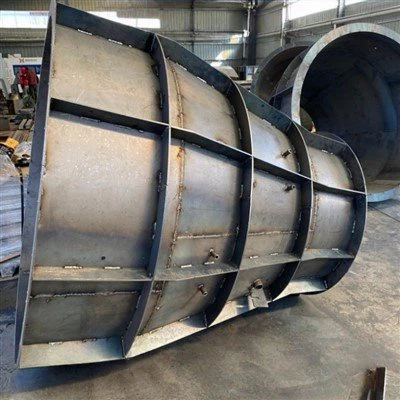
First, let’s break down what high altitude actually does to materials, and why this isn’t a problem confined to “mountaintop weirdos” like me (I’ve installed our tanks in 11,000-foot sites for a small ski resort’s water supply, so I speak from experience). The most obvious variable is air pressure, which drops roughly 1 inch of mercury for every 1,000 feet of elevation gain above sea level. At 10,000 feet, that’s 10 inches of mercury less than at sea level—so atmospheric pressure is 25% lower. That drop affects two core parts of how FRP tanks work: their structural integrity under pressure, and how their resins hold up to external and internal environmental stress.
Let’s start with internal pressure: for most of our clients, whether they’re storing potable water for a mountain village, process water for a gold mine in Peru, or diesel fuel for a remote research station, their FRP tank is holding liquid that’s usually at or below hydrostatic pressure from the tank itself. Wait, but low atmospheric pressure changes that? Actually, when a tank is closed (like a septic tank or a pressure vessel for water treatment), the air inside the tank expands as external atmospheric pressure drops at altitude. If your tank wasn’t designed for that expansion, you’ll get what we call “tank ballooning” first, and then catastrophic failure if the resin can’t stretch with the pressure shift. Early in my career, I worked with a small resort in Wyoming that installed a generic FRP tank for their fire suppression system without any high-altitude modifications. By the end of their first high-summer tourist season (when the lift at 9,500 feet is running 24/7), the tank was bulging so badly it looked like a misinflated basketball. We had to replace it, but that experience taught us a lesson: generic FRP tanks, which work great at sea level, don’t account for pressure differentials that turn harmless expansion into a hazard. That’s why every FRP tank we manufacture for high-altitude sites has a rated pressure capacity specifically calculated for the client’s elevation—plus integrated pressure relief valves calibrated to the site’s atmospheric pressure, so the air inside the tank can vent or fill as needed to balance the pressure shift.
Next, the big one: environmental stress at high altitude that’s more intense than anywhere near sea level. Let’s talk about UV radiation first. At 8,000 feet, UV-B radiation is 30% higher than at sea level, and UV-A is up 15%—because there’s less atmosphere to filter it. That’s why people get sunburned faster at altitude, and it’s exactly the same for polymers. FRP tanks use a resin matrix, usually polyester or vinyl ester, reinforced with glass fibers, and that resin breaks down when exposed to intense UV: it becomes brittle, cracks, and allows moisture or contaminants to seep into the fiberglass fibers, which weakens the tank over time. A lot of manufacturers cut corners here, adding just a thin UV-resistant coating as an afterthought. Not us. For all our high-altitude FRP tanks, we use a gel coat specifically formulated for extreme UV exposure, plus we add a small percentage of UV stabilizer directly into the resin matrix before it’s cured—so the UV protection isn’t just a top layer that can scratch or peel off, it’s built into every inch of the tank. We tested one of these tanks at a test site in Colorado at 10,500 feet, putting it on a test stand for three years straight, with no shade, no cover. When we took it down, the gel coat looked almost new, and pull tests on the fiberglass layers showed 92% of its original structural strength—compared to a generic tank from another manufacturer we ran the same test on, which had 58% strength left and visible cracking in the gel coat after 18 months.
Temperature swings are another critical high-altitude variable. Most high-altitude sites have what’s called “diurnal temperature variation”: 50-degree swings between day and night are common, and at 12,000 feet, it’s not unusual to go from 70 degrees Fahrenheit at noon to 20 degrees at midnight, even in summer. Polymers expand and contract with temperature, and FRP’s coefficient of thermal expansion is lower than steel or concrete, but it’s still a factor. The problem comes when the tank is full of liquid—say, hot process water during the day, and cold at night. If the tank’s wall can’t flex with those small, repeated shifts, you get microcracks in the resin, which let in moisture that freezes and expands even more (wait, another high-altitude quirk: water freezes at a lower temperature? Actually, at 10,000 feet, water freezes at 32.0 degrees, almost the same as sea level, but frost heave is a bigger issue for buried tanks. For tanks above ground, the repeated temperature cycling is the main threat). Our solution here is a custom-calculated laminate structure: we use a balanced fiber layup, meaning equal layers of fiberglass oriented at 0, 90, and 45 degrees, so the tank flexes evenly in all directions when temperatures shift. We also test each high-altitude tank in an environmental chamber, cycling temperatures from -20 to 120 degrees Fahrenheit, for 1,000 cycles—equivalent to 3 years of real-world high-altitude day-night shifts. None of our high-altitude tanks have failed a single one of these tests.
Let’s not forget another high-altitude challenge that’s often overlooked: altitude corrosion. Wait, high altitude doesn’t have more salt, like a coastal site, but it does have more dust and wind. Most mountain sites are remote, with little to no vegetation, so wind speeds are consistently higher than at sea level, especially above treeline. That wind carries abrasive dust, volcanic ash (if you’re in the Rockies or Andes), and fine mineral particles, which act like sandpaper on the tank’s surface, wearing away gel coat over time. For tanks located in high-wind, high-dust high-altitude sites, we add an extra layer of impact-resistant urethane coating over the standard gel coat, which resists abrasion way better than standard epoxy coatings. We recently installed six of these tanks for a mining camp in northern Peru, at 12,800 feet, where wind speeds regularly hit 50 mph and carry fine copper dust. After 18 months, the operators said they’d had to do zero maintenance on the tanks’ external surface—something the generic steel tanks they previously used required every 6 months to repaint and repair abrasion.
Now, I know what some of you are thinking: what about concrete tanks? A lot of old-timers in high-altitude sites swear by concrete, but let’s be real: concrete is porous, it cracks easily in temperature swings, and it’s heavy, which makes it hard to transport to remote sites. For a high-altitude site that’s 50 miles from the nearest paved road, you can’t haul a 50,000-gallon concrete tank on a standard truck—you need a modular, lightweight tank that can be split into sections and hauled in. FRP tanks weigh roughly 1/5th of a concrete tank of the same volume, and they’re modular, so you can install them in days, not weeks, without needing heavy cranes. Plus, concrete leaches lime into potable water, which is a problem for mountain towns that sell filtered water for drinking; FRP tanks are food-grade compatible, and our high-altitude models are NSF 61 certified, so they meet all potable water standards for the US and EU.
But wait, there are cases where FRP tanks aren’t the best fit for high altitude, and I’m not here to oversell. If a site is above 14,000 feet (the line where most human activities are only temporary, like research expeditions), the extreme temperature swings and UV can be too much for even our specialized FRP tanks—for those sites, we usually recommend smaller, insulated stainless steel tanks instead. Another edge case: if you’re storing high-purity chemicals that require strict temperature control, FRP’s resin can leach trace amounts of additives at very high temperatures, so stainless or PTFE-lined tanks are a better bet. But for 95% of commercial, residential, and industrial high-altitude applications—water storage, fire suppression, process fluids, wastewater treatment—FRP tanks are the most cost-effective, durable option, as long as they’re engineered specifically for high-altitude conditions.
Let’s circle back to that Wyoming ski resort I mentioned earlier. The owner called me a year after replacing their ballooned generic tank, and said that last winter, when temps dropped to -15 degrees and the resort was running at full capacity, the new high-altitude FRP tank was holding pressure perfectly. “I thought we’d have another disaster,” he said, “but this tank doesn’t act like the ones we found at sea level—it’s built for how we live here.” That’s the core of what I’ve learned in 12 years as an FRP tanks supplier: one size doesn’t fit all, especially not at altitude. Generic materials get a bad rap in extreme environments, but when you engineer a product to account for the specific stressors of high altitude—pressure differentials, intense UV, temperature swings, abrasive wind—FRP tanks outlast and outperform every other material on the market.

If you’re planning a project at high altitude, whether it’s a small residential water tank, a commercial mining system, or a municipal water supply for a mountain town, don’t settle for a generic tank that was built for sea level. Our team can work with you to calculate the exact pressure capacity, laminate structure, and coatings you need, tailored to your specific elevation, climate, and stored fluid. We have hundreds of installations across North and South America at elevations up to 13,000 feet, and we’ll send you case studies, test data, or even connect you with our clients in high-altitude sites if you want to hear firsthand how our tanks perform. Don’t waste time and money on a tank that will fail when the thin air, cold nights, and intense sun show up. Reach out, and let’s design an FRP tank that’s built for your high-altitude conditions.
FRP Environmental Equipment References
- American Water Works Association. (2019). Fiber-Reinforced Polymer Tanks for Potable Water Storage: Performance in Extreme Environmental Conditions. AWWA Journal.
- Federal Aviation Administration. (2021). Altitude-Related Material Degradation: A Survey of Materials Testing at High Elevations. FAA Aerospace Environmental Research Division Report.
- International Organization for Standardization. (2020). FRP Tanks for Industrial and Municipal Applications: Design for High-Altitude Pressure Differentials. ISO 22854:2020.
- Colorado State University High Altitude Research Station. (2022). UV Radiation and Polymer Degradation: 5-Year Long-Term Test Results for FRP Materials. High Altitude Technology Report.
Hebei Weihan Environmental Protection Equipment Co., Ltd.
We’re well-known as one of the leading FRP tanks manufacturers and suppliers in China, featured by quality products and good service. Please rest assured to buy customized FRP tanks at competitive price from our factory. Contact us for more details.
Address: No. 666 Chuangye Road, Zaoqiang County, Hengshui City, Hebei Province
E-mail: weihanmachine@gmail.com
WebSite: https://www.whanfrp.com/
