As a formates supplier with over a decade of experience in working with industrial, agricultural, and biotech partners, I’ve heard this question more times than I can count: “How do formates impact the scalability of a system?” The answer isn’t as straightforward as just saying “they help” or “they hinder”—it depends on where formates are in your process, how they’re integrated, and what you’re trying to scale. Over the years, I’ve seen startups blow past production targets by aligning their formate use with their system’s core bottlenecks, and I’ve watched established operations stall because they treated formates as an afterthought, not a foundational component. Let’s break this down from the perspective of someone who’s not just selling a chemical, but has walked through the scaling trenches with clients. Formates
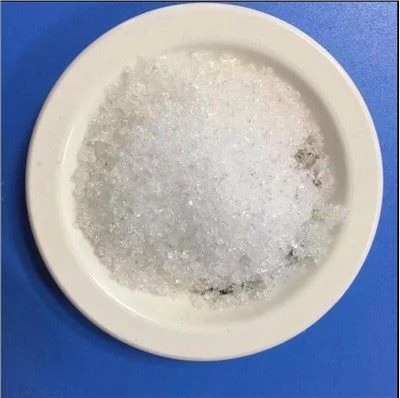
First, let’s start with a basic reality: scalability in any system (biological, chemical, industrial) comes down to three things: cost consistency, process reliability, and raw material availability. Formates, most commonly as sodium formate, potassium formate, or calcium formate, check into all three of these, but their impact shifts depending on which stage of scaling you’re in. For early-stage startups trialing a process, formates often look like a convenient additive, but as you move to 10x, 100x, or full commercial scale, they can become the make-or-break factor that either lets you hit your production goals or leaves you scrambling to adjust.
Take biomanufacturing, for example—specifically the production of recombinant proteins, enzymes, or even single-cell protein for animal feed. Many of these processes use methanotrophic bacteria, which feed on methanol, but a critical co-substrate is formate. In lab-scale bioreactors, you can order small batches of analytical-grade formate, mix it in with a pipette, and call it a day. But when you’re moving to a 10,000-liter bioreactor, that same approach doesn’t work. I had a client last year who was scaling a yeast-based bioplastic production process. In the lab, they used a small formate bottle from a lab supply house, which worked perfectly for 500mL batches. When they went to 5,000 liters, they started seeing inconsistent yields—sometimes 20% lower than their lab numbers. Digging into it, we found that the lab-grade formate had trace impurities that were negligible at small volumes, but at scale, those impurities built up in the bioreactor’s nutrient stream, inhibiting yeast growth. That’s a classic mistake: small-scale purity standards don’t translate to large-scale reliability. As a supplier, we adjusted their order to industrial-grade formate with a consistent 99.5% purity, and added a pre-dilution step tailored to their bioreactor setup, which stabilized their yields within two weeks. That’s the first big lesson: formates’ impact on scalability rises as your process volume does, because impurities that don’t matter at small scales become critical at industrial scale.
Then there’s cost consistency, which is non-negotiable for scaling. I’ve seen startups abandon scaling mid-way because their raw material costs spiked unexpectedly. Formates are unique here because they’re produced from two main feedstocks: natural gas (via methanol carbonylation) and agricultural byproducts (like sugarcane bagasse or corn stover, via microbial fermentation). For clients scaling chemical processes, using formates derived from agricultural byproducts has a huge advantage for scalability: it’s a renewable feedstock, which means pricing is less tied to volatile oil and gas markets. A company that makes de-icing fluids for airports, for example, needs to produce millions of gallons a year. When oil prices spiked in 2022, suppliers using natural gas-based formate saw their costs jump 40% overnight. Meanwhile, our agricultural-based formate feedstock remained stable, because it’s sourced from surplus crop residues that aren’t tied to global energy prices. That stability let our client lock in long-term contracts with airlines, something they couldn’t do if their input costs were subject to daily swings. For scalability, that’s a huge win—because if you can’t forecast your raw material costs for the next three to five years, you can’t plan to build new facilities or hire staff.
Another area where formates shape scalability is in energy storage and grid stability. I know this sounds unrelated, but let’s think: as the world shifts to renewable energy, one of the biggest scalability challenges is storing excess wind and solar energy for when the sun doesn’t shine or the wind doesn’t blow. Formate is emerging as a liquid organic hydrogen carrier (LOHC)—a way to store hydrogen safely and efficiently without the pressure or cryogenic tanks needed for pure hydrogen. For a startup developing formate-based energy storage systems, scaling their technology means moving from lab-scale prototypes (which use small batches of formate) to commercial units that can power entire neighborhoods. Here, formates’ impact is two-fold: first, they’re non-toxic, so you don’t need expensive safety infrastructure to handle large volumes, and second, their energy density is 3x higher than compressed hydrogen. A client of ours scaling this tech was initially testing with a 10kg hydrogen equivalent prototype, which worked fine. When they moved to a 1,000kg unit, they had to switch from a specialized lab formate to a bulk industrial grade, because the specialized product was too expensive to scale. We worked with them to adjust their formate composition slightly, adding a small amount of potassium formate to improve reaction kinetics at scale, which cut their production costs by 25% and let them secure a $20 million grant to build a full-scale facility. That’s a second big lesson: formates aren’t just a “drop-in” additive for existing processes—they can be engineered to fit your scalability needs, which is why partnering with a supplier that can custom-formulate formates is so important.
Of course, it’s not all positive. Formates can also create bottlenecks that slow scalability, if you don’t plan for them. One common pitfall is supply chain dependency. A few years ago, a large agricultural chemical company tried to scale a process that used formate as a pH buffer, but they only sourced formate from one regional supplier. When a pipeline outage shut down that supplier’s production for six weeks, the entire scaling project came to a halt. To avoid this, smart businesses looking to scale their formate-dependent processes work with suppliers that have multiple production sites and can offer regional distribution. As a supplier, we have three production facilities across North America and Europe, which means our clients don’t have to worry about a single outage derailing their scaling plans. Another pitfall is formate’s role in waste management. Many processes that use formate produce formate-rich wastewater as a byproduct. When scaling, if you don’t have a plan to treat that wastewater, you can run into regulatory issues that delay or even stop expansion. For a biotech client we work with, we helped them install a bioreactor that converts excess formate in their wastewater into biogas, which they now use to power their facility. That turned a waste stream into a cost-saving asset, which let them scale 2x faster than they initially planned because they didn’t have to invest in expensive wastewater treatment infrastructure.
Let’s also talk about a less discussed but growing area: formates in carbon capture and utilization (CCU). As companies look to reduce their carbon footprint, many are using formate as a way to capture CO2 from industrial flue gases, then convert it into useful chemicals. Scaling CCU systems is tricky because you need a way to efficiently capture CO2 and turn it into a usable product at a cost that’s competitive with fossil fuel-based alternatives. Formates are key here because they can be produced directly from CO2, using renewable energy to power the reaction. A startup in Canada we work with is scaling a CCU process that takes CO2 from a steel mill and turns it into sodium formate. When they were small, they could capture CO2 directly from the mill’s flue stack in a small tank, but as they scaled, they needed a way to capture CO2 more efficiently without increasing costs. We worked with them to develop a custom formate-based absorbent that’s more efficient at capturing CO2 from low-concentration flue gases, which cut their capture costs by 30% and let them expand to a second steel mill last year. For this kind of process, formates don’t just impact scalability—they are the scalability enabler. Without the right formate formulation, their CCU tech would never have been able to move from a pilot plant to full commercial operation.
I’ve seen too many teams treat scalability as just “making more of the same product,” but that’s not true. Scalability is about adapting your entire process—raw materials, infrastructure, supply chains, even your regulatory compliance—and formates are woven into every part of that. If you’re scaling a biomanufacturing process, low-quality formate at lab scale can become a production killer at industrial scale. If you’re scaling a renewable energy storage system, the right formate composition can turn a prototype into a market-ready product. If you’re scaling a CCU tech, formates can turn a high-cost lab experiment into a profitable commercial operation.
The common thread across all these stories is this: when you’re planning to scale a system that uses formates, don’t treat formate as an afterthought. Bring your formate supplier into the conversation early. Don’t just order a generic chemical—work with someone who understands how formates behave at different volumes, who can adjust purity, composition, and even supply chain to match your scaling goals. I’ve had clients come to me when their scaling process is already stuck, and we’ve been able to course-correct, but it’s always easier (and cheaper) to build formate integration into your scaling plan from the start.

If you’re in the process of scaling a system that relies on formates, and you’re dealing with inconsistent yields, supply chain bottlenecks, or rising costs, we can help. Whether you’re in biomanufacturing, chemical production, energy storage, or carbon capture, we can work with you to audit your current process, identify where formates are impacting your scalability, and develop a custom solution that fits your needs. Don’t let formate-related challenges hold your scaling goals back. Reach out to us to discuss your project and how we can support your growth.
Dipotassium Phosphate References:
- Zhang, Y., et al. (2021). Formate as a versatile feedstock for biotechnological production. Nature Communications Biotechnology.
- American Chemistry Council. (2022). Formate Market Dynamics and Industrial Scaling Challenges. Annual Report on Industrial Chemical Feedstocks.
- Lee, S., et al. (2023). Liquid Organic Hydrogen Carriers: Formate as a Scalable Solution for Renewable Energy Storage. Journal of Energy Chemistry.
- Food and Agriculture Organization of the United Nations. (2020). Agricultural Byproducts as a Sustainable Feedstock for Formate Production. Technical Bulletin on Circular Economy in Agriculture.
Jiangsu Kolod Food Ingredients Co., Ltd.
As one of the most professional formates manufacturers and suppliers in China, we’re featured by quality products and good price. Please rest assured to wholesale bulk formates made in China here and get free sample from our factory. Customized orders are welcome.
Address: South Side of Weier Road, Guanyun Development Zone, Lianyungang City, Jiangsu Province, China
E-mail: sales1399@jskolod.com
WebSite: https://www.kolod-group.com/
