Hey everyone, if you’re like me, you’ve probably poured countless dollars into that semi-automatic espresso machine in your kitchen, right? But here’s the thing: a machine alone only gets you so far. After years of working as a semi-automatic espresso machine supplier, I’ve seen so many folks skip on the right accessories and wonder why their shots taste off, or their daily brew routine feels clunky. Today, I’m breaking down exactly what accessories are actually worth buying—no overpriced gimmicks, just stuff that’ll make your espresso game way better. Semi Automatic Espresso Machine

First off, let’s start with the basics you can’t skip: the portafilter. Wait, I know what you’re thinking—“my machine came with one, why would I need another?” Hear me out. The stock portafilters that come with most semi-automatics are often made of cheap plastic or thin stainless steel, which doesn’t retain heat properly. If your portafilter’s not up to temp, your espresso will cool down way too fast, and the crema will vanish in 10 seconds flat. I’ve had customers tell me they switched to a dual-wall portafilter, and their shot quality improved overnight. Dual-wall ones have a small filter inside that builds pressure evenly, which is perfect for new baristas still learning to pull consistent shots. And if you’re more experienced, a naked portafilter is a game-changer—you can see exactly how the water flows through the grounds, so you can spot if you’re tamping unevenly or if your grind size is off. Pro tip: make sure it’s the right size for your machine—58mm is standard for most home semi-automatics, but tiny ones like Breville’s Barista Express use 54mm, so double-check before you buy.
Next up: a quality tamper. Let’s be real, tamping is half the battle for a good shot. A bad tamper—like the flimsy plastic one that came with your machine—will leave your grounds unevenly compressed, leading to channeling, which is when water shoots through weak spots and ruins your shot. I’ve seen people use anything from the back of a spoon to a random can they found in the pantry, and no wonder their espresso tastes bitter or sour. A good tamper should be solid stainless steel, with a flat, even base. Wait, and it needs to be the right size for your portafilter! If your tamper is too small, you’ll leave gaps around the edges. Too big, and it won’t fit at all. I recommend a 58mm tamper for standard portafilters, and look for one with a spring-loaded mechanism—this takes the guesswork out of how hard to press, so you tamp consistently every time. No more sore thumbs from pressing too hard! I’ve had so many customers come back saying their shots are finally balanced after switching to a decent tamper, and that’s the stuff that makes my day as a supplier.
Then there’s the milk steaming pitcher. A lot of home baristas ignore this, but the right pitcher makes all the difference for lattes and cappuccinos. Cheap, thin pitchers get way too hot too fast, which burns the milk and gives it a weird, sour taste. Stainless steel is the way to go, and get one with a spout that’s narrow and curved—this lets you do those cool latte art hearts and rosettes, right? Wait, and size matters. If you’re making lattes for one, a 12oz pitcher works, but if you’re making multiple drinks, go for 20oz. Also, look for one with volume markings on the side—so you know exactly how much milk to pour, which takes the guesswork out of measuring. I’ve seen people use regular drinking glasses before, and let’s just say their steamed milk never turns out right. Trust me, a $15-$25 steaming pitcher is way better than ruining a whole batch of milk because your pitcher is garbage.
Grinder accessories, wait—no, let’s talk grinders? Wait, no, if you already have a semi-automatic, a burr grinder is non-negotiable, but wait, the accessories for the grinder? No, let’s focus on espresso-specific accessories. Oh, right: a knock box. You can’t be tapping your used grounds into the sink or the counter—you’ll make a mess, and it’s bad for your machine too. A good knock box is solid, has a non-slip base, and is designed to contain the grounds so they don’t fly everywhere. Some even have a rubber lining to muffle the noise, so you don’t wake up your partner at 6am. I recommend a compact knock box that fits right next to your machine—no need for a huge one that takes up counter space. Bonus: get a grounds bin to go with it, so you don’t have to empty the knock box every day. It’s small details like that that make your routine way smoother.
Wait, another one: a water filter. Most home tap water has minerals like calcium and chlorine, which can build up in your semi-automatic machine’s boiler over time. That buildup is called limescale, and it makes your machine work harder, reduces the lifespan, and even changes the taste of your espresso—hard water can make your shots taste metallic. I always tell customers to get a machine-specific water filter, not a generic one. My company sells filters that fit our machines perfectly, and they remove those bad minerals so your machine runs better and your espresso tastes cleaner. Changing the filter every 2-3 months is easy, and it saves you from expensive repairs down the line. Way cheaper than fixing a boiler because you skipped a $10 filter.
Then there’s a shot timer and a scale. Wait, you might be thinking, “I can just guess the time and the amount!” But semi-automatic espresso is all about precision. A good coffee scale will measure the weight of your grounds and your shot, and most have a timer built-in. For a standard double shot, you want about 18-20g of grounds, pulled into a 36-40g shot in about 25-30 seconds. If you’re just guessing, you’ll never get that consistent. I’ve had customers tell me they went from pulling a good shot once a week to every single day after getting a scale. They’re not expensive—you can get a decent one for $30-$50, and it’s worth every penny. Pair that with a simple shot timer (some phones have apps, but a dedicated one is easier if your hands are full with the portafilter) and you’re golden.
Wait, let’s not forget about cleaning accessories. A lot of people skip this, but keeping your machine clean is key to good espresso. You need a good espresso machine cleaning brush for the group head, a portafilter basket cleaner, and some cleaning tablets for the descaling process. The group head is where the water comes out, and if old coffee oils build up there, they’ll make your shots taste stale. I recommend cleaning the group head after every 5-10 shots, and descaling every 3-6 months depending on your water hardness. Don’t use regular soap—use machine-specific cleaners, because soap leaves a residue that will mess with the taste. I always include a sample cleaning kit with every machine we sell, but it’s good to stock up on more when you run out. Also, a small cloth for wiping the portafilter and group head after each use—microfiber is best, because it doesn’t leave lint.
Wait, are there any accessories that are a waste of money? Oh, definitely. Those fancy “espresso cups” that are over $50 a pair? Not necessary. Sure, preheating your cups is good, but the cups themselves don’t make that much of a difference. And those weird gadgets that claim to “improve crema” but are just gimmicks—skip those. Stick to the practical stuff I mentioned earlier, not the Instagram-famous overpriced items.
Wait, let’s talk about what’s specific to semi-automatic machines, because that’s what we sell. Semi-automatic means you control the brewing time and the amount of water, right? So all these accessories are tailored to that. For example, a semi-automatic doesn’t have a built-in grinder (well, some do, but most don’t), so the tamper and portafilter are even more important because you’re in control of the pressure. If you had an automatic machine, you wouldn’t need to tamp, but with semi-automatic, it’s all on you—so the right tools make a huge difference.
I should also mention that as a supplier, I’ve tested almost every accessory out there, so I know what works and what doesn’t. I’ve had customers come to me with problems, and 9 times out of 10, it’s because they’re using a cheap accessory that’s not compatible with their machine. That’s why it’s so important to buy accessories that are made for your specific semi-automatic model—generic stuff might fit, but it won’t work as well.
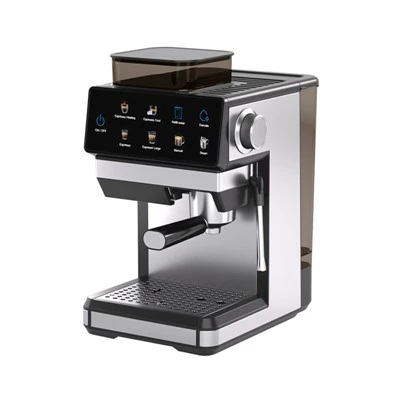
Wait, let’s wrap this up a little. Let’s say you’re just starting out with your semi-automatic, or you’ve had it for a while and want to upgrade your routine. Start with the basics: a good tamper, a quality portafilter, a knock box, and a water filter. Then add a scale and timer, and a milk pitcher if you make lattes. You don’t need to buy all of this at once—build your accessory collection over time, and you’ll see your espresso get better every single day.
Semi Automatic Espresso Machine Now, if you’re in the market for a new semi-automatic machine, or you need any of these accessories, feel free to reach out. We’ve got a full range of accessories that fit our machines perfectly, and our team can help you pick exactly what you need based on your brewing style. Whether you’re a total beginner or a seasoned home barista, we’re here to help you make the best espresso possible. So don’t hesitate to get in touch to chat through your needs—we’d love to help you level up your home espresso game.
References
- Specialty Coffee Association. (2022). Home Espresso Brewing Best Practices.
- Coffee Equipment Association. (2021). Accessory Recommendations for Semi-Automatic Espresso Machines.
- Journal of Sensory Studies. (2020). Impact of Portafilter Heat Retention on Espresso Flavor Profile.
- National Coffee Association USA. (2023). Home Barista Toolkit: Essential Accessories for Consistent Brewing.
- European Coffee Bar Association. (2022). Semi-Automatic Machine Maintenance Guide for Home Users.
Foshan City Moccona Electric Co., Ltd.
With abundant experience, we are one of the leading manufacturers and suppliers of semi automatic espresso machine in China. We warmly welcome you to buy bulk durable semi automatic espresso machine from our factory. If you have any enquiry about cooperation, please feel free to email us.
Address: Room 202, Building 16, Tongde Intelligent Manufacturing Park (TDIMP), No.9 Guizhou Avenue East, Shangjia Community, Ronggui Street, Shunde District, Foshan City, Guangdong Province
E-mail: tim@mocconaelectric.com
WebSite: https://www.mocconaelec.com/
