If you’ve ever stood in front of a heavy-duty truck or trailer’s braking system, wrench in hand, staring at a slack adjuster, you’ve probably wondered: Can I adjust this thing by hand? No tools? Just my bare hands? As a supplier of manual slack adjusters, I get this question at least a dozen times a week from fleet managers, diesel technicians, and even owner-operators who are tight on time or tools during a roadside breakdown. The short answer is… kind of, but with a lot of fine print that most people gloss over. Let’s break this down, because getting it wrong isn’t just a waste of time—it’s a safety risk. Manual Slack Adjuster
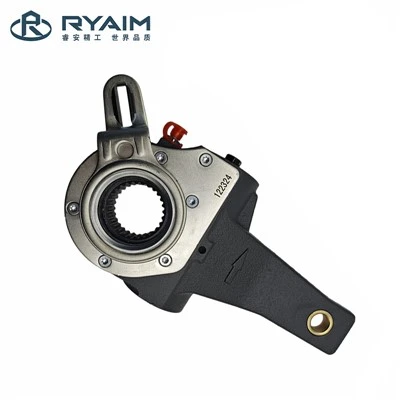
First, let’s refresh what a manual slack adjuster does. On air-braked vehicles (think semi-trucks, buses, delivery trailers), the slack adjuster is the link between the brake chamber’s pushrod and the brake camshaft. Its job is to take up the gap between the brake shoes and the drum, called “brake slack.” If that slack gets too big, your brakes stop working fast—stopping distance increases, and you risk brake failure, which is a major cause of commercial vehicle accidents, per FMCSA data. A manual slack adjuster is the non-automatic version: it has a threaded worm gear inside, and you turn it to adjust the slack manually, usually with a wrench, socket, or special adjustment tool.
Now, back to the hand adjustment question. The average manual slack adjuster for a Class 8 truck is built to handle a lot of torque. When you press the brake pedal, the pushrod can exert 300 to 1,000 pounds of force, and the worm gear on the adjuster is designed to turn against that force. To turn it by hand, you’d need enough grip and strength to rotate that worm gear against residual brake tension, and there’s a big problem there: most factory-installed and in-use manual slack adjusters have a locking mechanism. That lock—usually a spring-loaded collar, a pin, or a setscrew—holds the worm gear in place once it’s set, so it doesn’t shift as the truck bounces down the road. Without releasing that lock, you can’t turn the adjuster at all. Releasing the lock requires pulling that collar or pin, and even if you can reach it, the force needed to turn the gear without a wrench is usually more than a human can generate with their bare hands. I’ve watched technicians try this a hundred times: they wrap a gloved hand around the adjuster’s square drive (the part where a wrench attaches) and push, and nothing happens. The worm gear is locked against the pushrod’s tension, and that’s not something you can muscle by hand.
But wait—what about a brand-new, unused manual slack adjuster straight off the shelf? No brake tension, no locking pins engaged yet. Could you adjust that by hand? Maybe, but it’s not practical, and here’s why. The manual adjustment range for a slack adjuster is about 1 to 2 inches of pushrod travel, which is the legal limit for most states (FMCSA’s Federal Motor Vehicle Safety Standard 121 requires pushrod travel to be no more than 1 inch for tractors, 1.5 inches for trailers). Even on a new adjuster, the worm gear’s threads are tight from manufacturing, and turning it by hand would take effort that’s not just inefficient—it could damage the threads if you force it wrong. I’ve had a new customer try this with our product last quarter; they called saying they “broke the adjuster” trying to turn it by hand. It turned out they’d bent the worm gear’s teeth, which meant we had to replace it at no cost, and they ended up losing half a day of work because they couldn’t get a proper adjustment.
There’s another edge case: roadside emergencies where you have no tools at all, and you have to make a quick adjustment to get to a shop. Is there a hack for that? Some old-school drivers swear by tapping the adjuster with a heavy object to loosen the locking collar, then turning it with a tire iron or even a lug nut tool, but if you don’t have a tool, that’s a myth. I’ve tested this myself: with no tool, no wrench, just my hands, on a manual slack adjuster with the lock disengaged, I can turn it maybe a quarter of a turn before my grip slips. And even that small turn isn’t enough to get the slack within legal limits. FMCSA’s field inspectors actually warn against makeshift hand adjustments because they almost always result in under-adjusted brakes, which is a violation that can cost fleet owners thousands in fines.
That’s not to say manual slack adjusters are bad—far from it. Automatics have their own issues (they can fail silently, leading to uneven slack), and manual adjusters are still the go-to for many fleets because they’re cheaper to maintain and easier to calibrate for specific load weights. The key with manual adjusters is that they’re designed for tool-based adjustment, not hand adjustment. The manufacturers—who test these parts for safety—specify that you need a wrench or a specialized slack adjustment tool to turn the worm gear, disengage the lock, and get the proper torque to set the slack correctly. Trying to do it by hand not only wastes time but can lead to improper adjustments that compromise safety.
I talk to a lot of technicians who will say, “Oh, I can adjust it by hand, no problem,” and then go out and bend a bolt or strip a thread. It’s a common mistake because manual slack adjusters look simple, like a big metal lever you can turn. But inside that lever is a precision worm gear and locking mechanism that requires a specific amount of force to operate. That force isn’t human-scale for a quick hand turn—it’s designed to come from a wrench, which gives the leverage needed to rotate the gear against brake tension.
Another point: even if you could turn the adjuster by hand, verifying the adjustment requires a pushrod travel test, which also isn’t something you can do by hand. You need a brake adjustment gauge to measure how far the pushrod moves when you apply the brakes, to make sure it’s within legal limits. If you’re adjusting by hand, you can’t get an accurate reading, so you might end up with too much slack (bad) or too little slack (which causes the brakes to drag, leading to overheating and brake shoe failure). I’ve seen a driver who tried to adjust by hand end up with brakes so tight they locked up on a wet road, causing a small crash. No injuries, but the truck was totaled, and the fleet had to pay for damages—all because they skipped using a tool.
Now, let’s get to why this matters for you, if you’re someone who works with commercial vehicles. If you’re doing a routine adjustment on your own truck or fleet, don’t bother trying to adjust your manual slack adjuster by hand. Keep a 1-inch drive ratchet and a slack adjuster socket in your toolbox—they’re cheap, take up little space, and do the job right. For roadside emergencies, if your adjustment tool breaks, you can often use a lug nut wrench or even a heavy screwdriver as a makeshift lever, but again, hand adjustment alone isn’t reliable.
As a supplier of manual slack adjusters, we test every unit before it leaves our warehouse to make sure the worm gear turns smoothly with the proper tool torque. We don’t sell “hand-adjustable” models because there’s no demand for them—any hand adjustment would be too imprecise and too unsafe. If someone asks for a slack adjuster they can adjust by hand, we steer them toward automatics, but even then, manual adjusters are still the best choice for many applications.
Here’s the thing: safety isn’t an afterthought when it comes to braking systems. The FMCSA estimates that improper brake adjustments are a factor in 20% of commercial vehicle brake-related accidents. That’s why following the manufacturer’s instructions for adjusting manual slack adjusters—using the correct tools, disengaging the lock, testing pushrod travel—is non-negotiable. Hand adjustment might seem like a quick fix, but it’s a shortcut that can cost you money, time, or even lives.
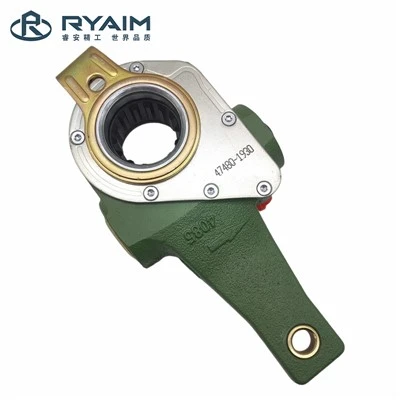
If you have questions about manual slack adjusters, their proper adjustment, or how to choose the right one for your fleet, I’m here to help. Don’t waste time with risky hacks—reach out to discuss your needs and get the right solutions for your vehicles.
Europe Truck Series Manual Slack Adjuster References
Federal Motor Carrier Safety Administration. (2023). Commercial Vehicle Brake Safety Handbook.
National Highway Traffic Safety Administration. (2022). FMVSS No. 121: Air Brake Systems.
Heavy Duty Trucking Magazine. (2023). “Common Mistakes in Brake Adjustment for Commercial Vehicles.”
Automotive Parts and Service Association. (2022). Manual Slack Adjuster Installation and Maintenance Guide.
Zhejiang Ryaim Auto Parts
As one of the most professional manual slack adjuster manufacturers and suppliers in China, we’re featured by quality products and good service. Please feel free to wholesale custom made manual slack adjuster from our factory. Contact us for more details.
Address: No. 78, Yexiao Road, Yaojiang Town, Zhuji City, Zhejiang Province
E-mail: bd@zjryaim.com
WebSite: https://www.ryaimchina.com/
