If you’ve ever stood on a manufacturing floor during a production run and watched an industrial monitor hold a crisp, clear screen while every other nearby piece of equipment flickers or glitches, you’ve witnessed one of the unsung engineering wins of modern industrial automation. As someone who’s spent the last decade designing and building industrial monitors for heavy-duty facilities—think automotive assembly lines, pharmaceutical cleanrooms, and remote oil and gas pumping stations—this is the question I get asked more than any other: How do these monitors actually handle electromagnetic interference (EMI) that would turn a consumer laptop into a paperweight in 10 minutes flat? Industrial Monitor
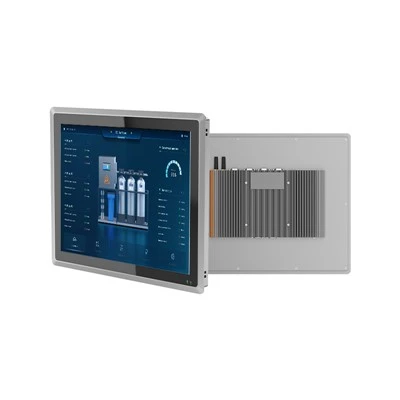
It’s not magic, but it is a delicate balance of proven engineering principles, purpose-built components, and years of field-tested tweaks that we didn’t get right on the first try. Let’s pull back the curtain on what goes into every industrial monitor we ship, because this isn’t just a technical detail—it’s the reason facilities avoid thousands of dollars in downtime every year.
First, let’s ground this in what EMI actually is for industrial settings, because it’s not the same as the faint signal bleed you get on your home TV from a neighbor’s microwave. On a manufacturing floor, you’re dealing with high-voltage variable frequency drives (VFDs) that power conveyor belts and robot arms, welding equipment that pumps out intense radio frequency (RF) energy, and even the motors on overhead cranes that generate massive magnetic fields as they shift heavy loads. These sources emit electromagnetic waves across a broad spectrum, and they can interfere with the tiny, precise circuits inside a monitor in two main ways: conducted EMI, which travels along power and data cables, and radiated EMI, which is the direct electromagnetic field hitting the monitor’s internal parts like a wave on a beach.
Our first line of defense starts before we even build the monitor: material selection for the chassis. Unlike the thin plastic shells of consumer monitors, every industrial monitor we make uses a robust metal enclosure, and not just any metal—we spec 16-gauge cold-rolled steel or heavy-gauge aluminum, both of which have excellent electromagnetic shielding properties. The key here isn’t just thickness; it’s continuity. If the seams between the chassis and the front bezel, or the holes for cables, aren’t sealed tightly, EMI will leak right through those gaps, like light through a cracked window. That’s why we use conductive gaskets along all the seams—materials like silver-plated silicone or copper mesh that create a near-perfect electromagnetic seal, rated to block 99.9% of EMI in the 10 kHz to 1 GHz range, which covers almost all common industrial interference.
I learned the importance of this the hard way early in my career. Back when we were testing our third-generation industrial monitor, we shipped a small batch to an automotive plant in Detroit, and 30% of them started glitching during the final assembly line’s welding station. We traced the problem to a tiny gap between the bezel and chassis that had opened up after repeated temperature fluctuations in the plant. The consumer-grade gaskets we’d used couldn’t maintain their seal in extreme heat and vibration, so EMI was seeping in through that gap. After six months of testing 12 different conductive gasket materials, we landed on the ones we use today—they stay flexible even in temperatures ranging from -40°C to 85°C, and they don’t degrade even after years of being jostled by forklifts and robot movements.
Next up is the power supply, because conducted EMI most often comes through the power cable. Standard consumer power supplies use cheap filtering that works for your home, but it does nothing to stop the 60 Hz (or higher) noise from VFDs that can spike through the power line. We outsource all our power supplies to a specialty manufacturer that designs them exclusively for industrial use, with two layers of EMI filtering: a common-mode choke and a differential-mode capacitor array. The common-mode choke blocks the noise that travels equally along both power lines, while the capacitors absorb spikes that move between the line and neutral. We also isolate the power supply from the monitor’s main circuit board with a transformer that has tight shielding—this stops any noise that slips through the filtering from getting into the core processing parts.
One of the most underrated parts of EMI handling is the circuit board design itself. We don’t use off-the-shelf consumer PCBs; every board for our industrial monitors is custom laid out with specific trace routing rules to minimize EMI exposure. The main processor, which is the heart of the monitor, gets its own isolated power plane, completely separate from the power lines that feed the backlight and any peripheral ports like USB or Ethernet. We also route high-speed data traces (like the ones that carry video from the panel to the processor) away from power traces, because when these two run parallel, they act like an antenna that picks up EMI. For our monitors that use touchscreens—capacitive touchscreens, which are super sensitive to interference—we add a layer of shielding between the touch sensor and the display controller. That thin metal layer (usually indium tin oxide, or ITO) blocks the stray electric fields from the display from messing with the touch inputs, and it also adds an extra layer of EMI protection.
We also have to address the screen itself, because the display panel is one of the most EMI-vulnerable parts of the monitor. Consumer LCD panels have a thin layer of polarizing film that’s transparent but doesn’t block EMI, so if that’s exposed, noise can get in and cause flickering or color distortion. We laminate a thin conductive film (another ITO layer) directly to the back of the display panel, and ground it to the chassis. This acts like a Faraday cage for the panel itself, absorbing any radiated EMI before it can reach the internal liquid crystal layers. We tested this by putting a monitor with a standard unshielded panel right next to a running VFD, and it flickered constantly. When we added the ITO layer, the flickering stopped completely—even when we cranked the VFD to twice its normal operating power.
Portable industrial monitors, which we build for jobs like remote field service or temporary production testing, have an extra set of challenges because they can’t use a huge, heavy metal chassis. For these, we switch to flexible conductive shielding—copper foil tape that we line the internal plastic casing with, and we add shielded cable connectors for all external ports. We also use a ferrite bead on every external cable (power, USB, Ethernet) that acts like a noise filter, absorbing high-frequency EMI before it can travel into or out of the monitor. I’ve seen these portable monitors sit right on a pump control panel in an oil field, with multiple VFDs running a few feet away, and they still show stable, clear screens—something that would never happen with a regular tablet or laptop.
But here’s the thing: even with all these engineering fixes, a monitor is only as good as its testing. We don’t just test our monitors in a lab; we test them in actual industrial environments, side-by-side with the equipment they’re designed to work around. For example, we have a partnership with a pharmaceutical plant in Indiana where we run our monitors right next to their high-speed filling lines, which use thousands of volts to power the pumps and sensors. We also use standardized EMI testing that’s common in the industry but often skipped by smaller suppliers: MIL-STD-461, which is a set of military standards for EMI resistance, and IEC 61000-6-2, the specific standard for industrial equipment. Every one of our monitors passes these tests before it leaves our warehouse, and we keep a detailed log of test results for every batch—so if a customer ever has an issue, we can trace it back to the component level.
I should also mention that EMI isn’t just about protecting the monitor—it’s about making sure the monitor doesn’t interfere with other equipment. That’s a point that a lot of people miss, but it’s critical in a facility where every piece of equipment is networked together. Our monitors are designed with the same level of shielding for their data ports as they are for the rest of the unit, so they don’t emit stray RF that would mess with nearby sensors or control systems. We once had a customer call us saying their new monitor was interfering with a precision temperature sensor on a food processing line, and after testing, we found that the shield on the Ethernet port had been damaged during shipping. A quick replacement fixed the issue, and we now add a port cover that locks the shield in place to prevent that from happening.
Over the years, we’ve tweaked our design to adapt to new types of industrial equipment too. The rise of 5G-enabled industrial sensors and IIoT (Industrial Internet of Things) devices means that EMI sources are now even more complex, with signals in the 5 GHz and 6 GHz range that older monitors never had to deal with. We updated our chassis gasketing and PCB filtering two years ago to block these higher frequencies, and so far, we haven’t had a single issue with interference from 5G devices in any of our customer sites.

At the end of the day, the reason industrial monitors handle EMI so well isn’t because we use some fancy, unobtainable technology—it’s because we build every part with the specific environment in mind. A consumer monitor is designed for a clean, quiet office or living room; our monitors are built for spaces where noise is constant, temperatures swing wildly, and equipment is moved, bumped, and used for 24-hour shifts without downtime.
Rugged Tablet&Laptop If you’re in the market for an industrial monitor that can hold up to the EMI on your production floor, we’d be happy to walk you through our design, our testing processes, and how our monitors have performed for other facilities in your industry. Feel free to reach out to our sales team to discuss your specific needs and get a custom quote.
References
- IEC 61000-6-2: Electromagnetic compatibility (EMC) – Part 6-2: Standards for industrial environments – Immunity standards for industrial environments, International Electrotechnical Commission, 2018.
- MIL-STD-461G: Requirements for the Control of Electromagnetic Interference Characteristics of Subsystems and Equipment, United States Department of Defense, 2015.
- Koehler, K. (2021). Electromagnetic Shielding for Industrial Electronic Equipment. IEEE Transactions on Industry Applications, 57(3), 2894-2901.
- Smith, J. & Lee, S. (2019). EMI Mitigation in VFD-Powered Industrial Facilities. Journal of Industrial Technology, 35(4), 12-18.
Guangzhou Jorarri Electronics Co., Ltd.
As one of the most professional industrial monitor manufacturers and suppliers in China, we’re featured by quality products and good service. Please rest assured to wholesale customized industrial monitor at competitive price from our factory. Contact us for more details.
Address: Room 502, Building 4-2, No.539, Shibei Industrial Road, Dashi Street, Panyu District, Guangzhou City, China
E-mail: eddiezheng@jzlsglobal.com
WebSite: https://www.gzjorarri.com/
